

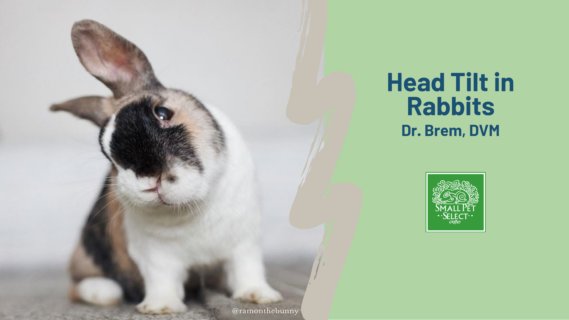
The first time I saw one of my rabbits with his head tilted, unable to straighten it, I pretty much freaked out. It was my first rabbit, long before I became a veterinarian, and I had never even heard of this happening before. Fortunately, after going to my vet and being treated, he did get better.
Since then, I’ve had or seen many rabbits with head tilt – also called torticollis or wry neck. Sometimes they’ve had other signs along with the head tilt, including circling, rolling, eyes darting back and forth (nystagmus), legs not working well (paresis), and/or stumbling (ataxia). These can all be signs of either an infection (usually ear) or a neurological issue, and most cases of head tilt can be categorized in these two ways.
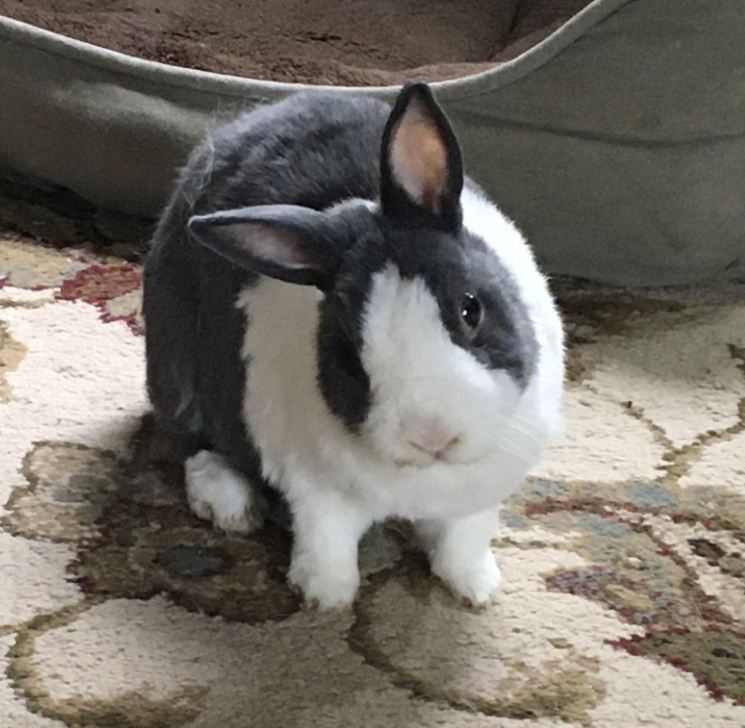
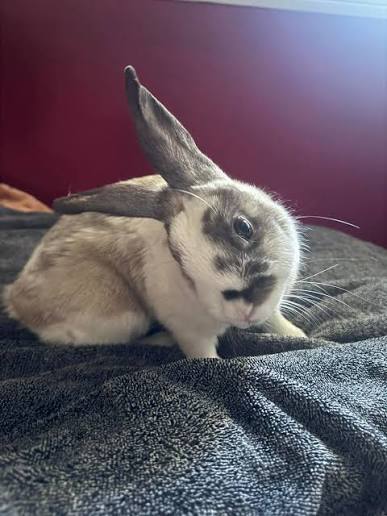
Tucker lived for years with a slight head tilt after he experienced a middle-ear infection.
Photographer: Amy “Brem” Bremers. Used with permission.
What Causes Rabbits with Head Tilt?
Infections
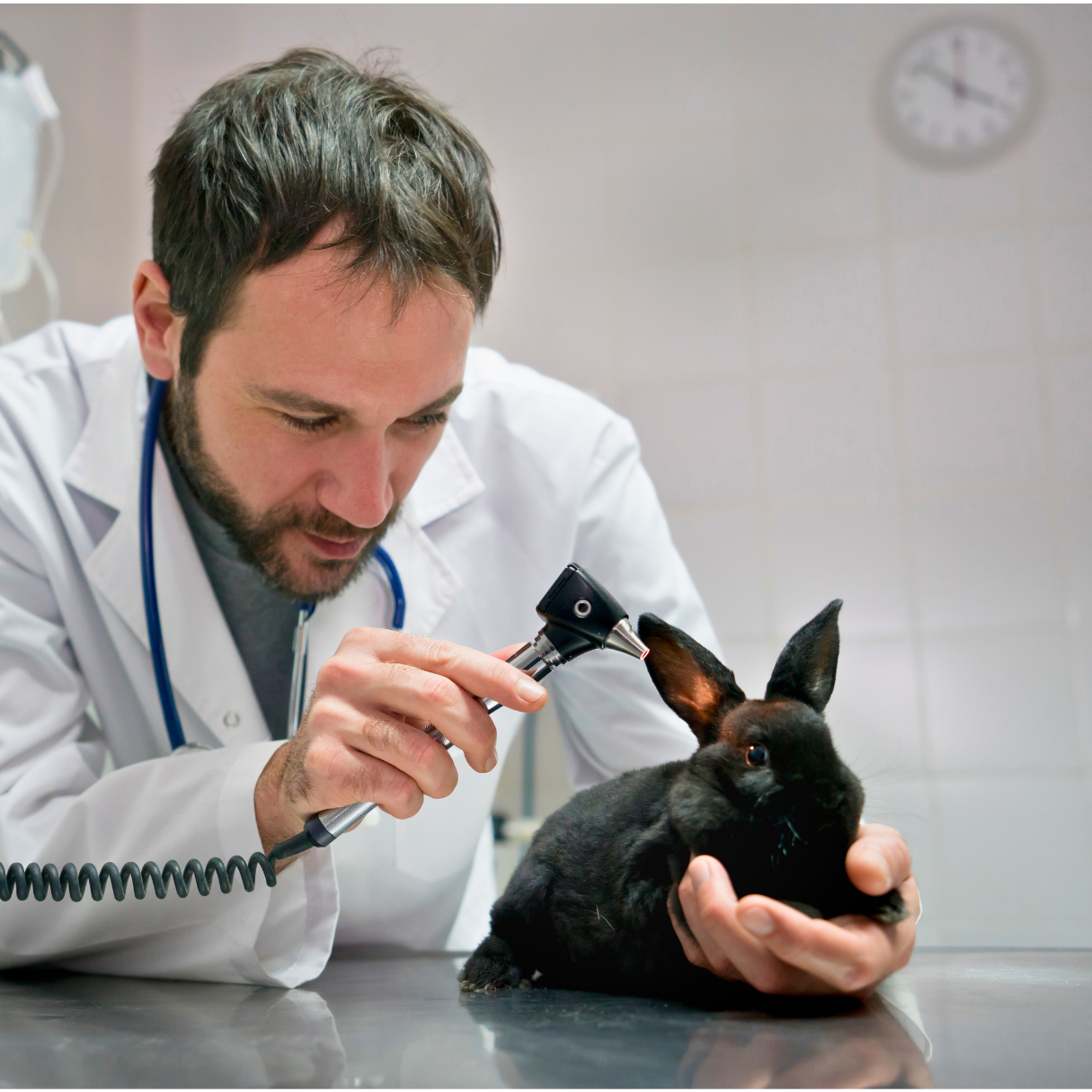
One of the most common causes of head tilt in rabbits (and other critters) is a bacterial infection of the middle or inner ear. The reason for this is that the vestibular system, the main part of the body that controls balance, is located near the base of each ear.
An ear infection can cause swelling of the soft tissues near the vestibular system and interfere with its purpose of keeping everything “straight.” This inflammation, therefore, causes tipping and falling over.
An abscess deep in the ear can similarly cause head tilt. An abscess is a pocket of bacteria and white blood cells (immune system cells that fight bacteria) that the body has walled off. An abscess can put pressure on the vestibular system, causing the signs you see. An abscess can be serious because it is hard to treat. Since it is walled off, it is hard for medicine to penetrate it.
An infection or abscess in the brain can also cause head tilt. Other neurological signs are usually present in this case.
Finally, a severe infestation of ear mites can cause one. Ear mites cause crusting in the outer ear, and if enough mites and crusts are present, the ear can actually be weighed down to one side. Ear mites should be treated by a vet, and the crusts should never be pulled off, since that can be very painful.
Neurological
The protozoal parasite Encephalitozoon cuniculi (what a mouthful!), more simply called E. cuniculi, is the main culprit in a neurological head tilt. The “spores” of the parasite invade the brain (and can also invade the kidneys and eyes) and form cysts, which eventually rupture. This causes severe inflammation and neurologic signs such as rapid eye movements, tremors, circling and rolling, and head tilt.
Testing for E. cuniculi is expensive and not always conclusive, so often veterinarians (including myself) rely on the history you give (things about your rabbit’s past, the food it eats, what your home and your rabbit’s enclosure are like, etc.), the signs your rabbit is displaying, and a thorough exam in order to diagnose it. And sometimes, because E. cuniculi isn’t always possible to definitively diagnose, vets will treat for it without actual hard proof.
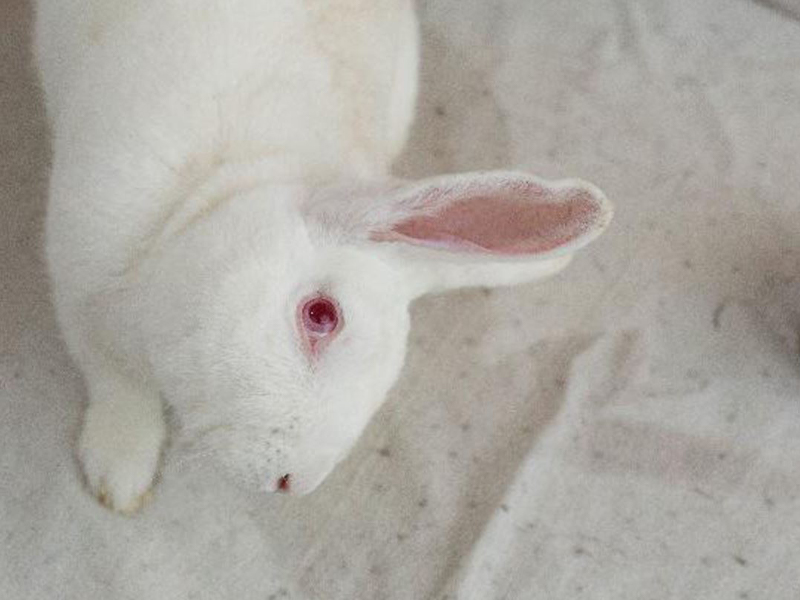
Another parasite that can infest the brain is a roundworm called Baylisascaris procyonis (another mouthful!). This is much rarer than E. cuniculi but has the same signs. It’s often treated the same way, although treatment isn’t as successful.
Some other causes of neurological head tilt, although also rarer, include a brain tumor, a stroke, a toxin the rabbit ingested or was exposed to, and trauma such as to the head or spine. These typically have additional signs than just head tilt. Again, the history you give your vet along with the exam can usually give your vet a good idea of the issue and how to treat it.
Treatment for Head Tilt
Treatment of head tilt depends on the cause.
For example, if the cause is an ear infection, an antibiotic – or even more than one – will be prescribed. Which antibiotic is prescribed depends on the bacterium causing the infection.
Ideally, a bacterial culture is performed. This is when a vet obtains and sends a sample to a lab, and the bacterium and the best antibiotic to kill it are identified. It’s often difficult to obtain this sample though, so often a broad-spectrum antibiotic that is effective against the suspected bacterium is prescribed.
If the infection is deep in the ear, your vet may recommend flushing the ear under sedation to attempt to break up any abscess and clean out pus before treating. This allows the antibiotic to work better.
Antibiotic treatment may last for as long as a couple months in a severe infection. Regardless of how long the treatment is for though, it is very important to give the antibiotic the whole time it is prescribed for, even if your rabbit seems better. Bacteria are very good at hiding and pretending they’re gone, and if you stop treatment early the infection will get worse and much harder to treat.
Since the most common cause of neurologic head tilt is E. cuniculi, as mentioned earlier many vets will treat for that without any hard proof. The main treatment, a particular anti-parasitic, is relatively safe and usually won’t cause any problems even if that’s not what your rabbit has. It is important to make sure your vet is rabbit-savvy though, because some medications that were previously thought to work have since been shown to be toxic.
Other treatments may include an anti-inflammatory medication and an anti-vertigo (anti-dizziness) medication. Sometimes when rabbits experience inflammation and pain or balance issues, they don’t want to eat – which of course causes even more problems!
Finally, if your rabbit has head tilt, some type of supportive care will likely be necessary for a while. For example, you may need to raise the height of bowls so your rabbit doesn’t fall over trying to drink or roll up some towels to help prop your rabbit up and stop it from falling over.
If your rabbit isn’t eating or drinking, you’ll need to talk to your vet about syringe feeding and providing fluids. For a long-term issue, acupuncture or massage may be helpful. And your rabbit may also need (and enjoy!) some physical therapy such as running around and exploring while you provide support with a towel under its belly.
Prevention
Unfortunately, there isn’t really anything you can do to prevent head tilt. The best thing you can do is take your rabbit to your vet as soon as it shows signs. That way treatment can begin before the situation gets worse.
It can sometimes take weeks or even months before head tilt improves. Sometimes rabbits never fully recover, like my rabbit Tucker. His head tilt improved, but he lived the rest of his life with a little bit of one. Personally, I think it just made him cuter! Even if your rabbit ends up with a permanent head tilt, they can most definitely still live a happy life.
Want to learn more? Read Head Tilt in Rabbits: Don’t Give Up for additional guidance and support.
Copyright 2026 Amy “Brem” Bremers, DVM