


What to feed a rabbit can get confusing when many pet forums give you different answers. Forget what cartoons taught you: grass hay makes up 80% of a rabbit’s actual diet, whereas carrots are just an occasional treat.
Keeping them healthy becomes second nature when you get the daily ratio right. Here’s how to balance hay with other parts of their menu.
What to Feed a Rabbit: The 80% Hay Rule
When deciding what to feed a rabbit, the menu usually starts with grass hay. Generally, hay takes up roughly 80% of your bun’s daily diet.
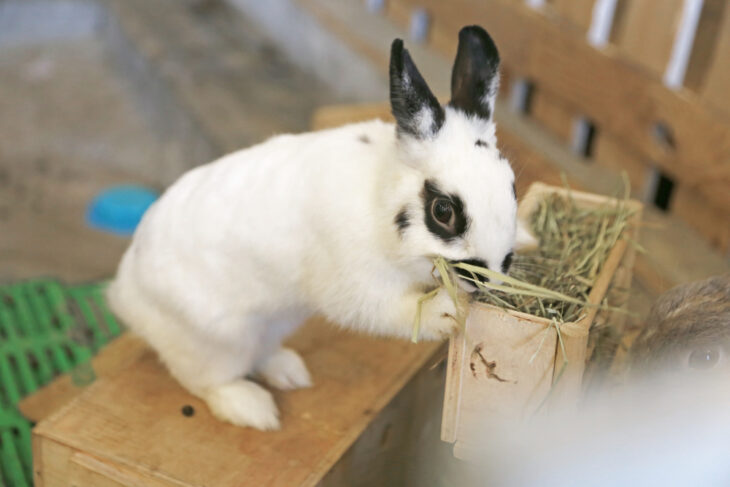
A rabbit’s teeth grow continuously throughout its life. Chewing long-stemmed hay forces their molars to grind back and forth, wearing down the crowns naturally and preventing painful molar spurs from forming. Hay also drives gut motility, so your tiny roommates have to munch through it every day.
The right type of hay boils down to your little friend’s age and health:
- Timothy hay: This is the crème de la crème for adult rabbits, providing a good balance of fiber, protein, and calcium. 1st Cutting Timothy Hay offers the most fiber while providing fewer calories to help prevent weight issues. The 2nd and 3rd Cuttings have tender leaves and seed heads if your buns prefer a softer chew.
- Alfalfa Hay: Rich, sweet, and also packed with beneficial nutrients. Rabbits under six to seven months, pregnant or nursing mothers, or underweight rescues can benefit from alfalfa’s high calcium. You’ll have to skip it for healthy adult buns, as excess calcium can cause bladder stones.
- Orchard grass & oat hay: Orchard Hay is super soft and a lifesaver for pet parents with timothy-pollen allergies. Oat hay, on the other hand, will make a satisfying crunch for rabbits that enjoy crisp snacks. You can mix either orchard grass or oat hay with timothy hay.
How to Choose Pellets: What to Feed a Rabbit for Extra Nutrients
While hay provides the majority of what your fur potatoes need, high-quality Pellets fill in the missing nutrient gaps. You can think of them as supplements rather than the main meal.
Ingredients to avoid
Don’t grab the first bag off the shelf. Ingredients matter. When shopping for pellets, steer clear of muesli or gourmet mixes loaded with corn, dried fruit chunks, seeds, nuts, or other fillers. These options will encourage your rabbit to pick out the tasty, fatty pieces and ignore the fiber-rich ingredients.
What to look for
Stick to plain, green pellets with a beneficial nutritional profile. For example, many high-quality brands provide 25% to 29% crude fiber and up to 14% protein.
Portion size
For adult bunnies that weigh six pounds, it’s recommended that they consume just 1/4 cup of pellets each day because overfeeding can lead to obesity and digestive issues. Growing rabbits will need approximately 1/2 cup of pellets each day.
You need to take all these into consideration when sifting through your pantry to find what to feed a rabbit.
Vegetables and Leafy Greens That Are Safe For Rabbits
Fresh leafy greens can also be part of a rabbit’s daily diet, as they add moisture to their meals. You can start with 1 cup per 2 pounds of body weight per day, though individual rabbits may need adjustments.

If you find that feeding them only one leaf is too mundane, perhaps you could create a mixture of at least three different vegetables.
Keep in mind that some vegetables contain high amounts of calcium or oxalates, which could affect your rabbit’s kidneys or bladder if they’re fed regularly.
Daily  |
Occasionally (once or twice weekly)  |
| Romaine, green, and red lettuce | Kale |
| Bok choy | Beet greens |
| Cilantro | Spinach |
| Dandelion greens | Swiss Chard |
| Parsley | |
| Carrot tops | |
| Dill | |
| Escarole | |
| Mint | |
| Basil |
Introducing new vegetables
When contemplating what to feed a rabbit next, don’t rush. If your options are vegetables, give your rabbit a small amount of one new green and monitor its droppings over the next day or two.
Soft poop or messy cecotropes can mean that your bunny’s stomach can’t process the veggie, or the portion is too large.
Fruits and Treats: Balancing the Sugar Content
The good bacteria in a bunny’s digestive system survive on fiber. However, when you introduce sugary snacks like honey sticks and yogurt drops into the mix, the bad bacteria build up, causing gas and bloating.
Fresh fruits are preferable because they contain more water, which reduces their sugar content. Still, you can opt for sugar-free dried fruits like Cranberry Apple, Banana, Papaya, or Goji Berries. When thinking about what to feed a rabbit other than fruit treats, Timothy Hay Cubes and Garden Sticks come in handy.
Just remember that excess treats can cause dental disease and liver problems.
Dangerous Foods For Rabbits
Pop culture and outdated pet care articles insist that iceberg lettuce and carrots are rabbit staples, and many well-meaning parents have fallen into these traps. The truth is, neither deserves a regular spot on your bun’s menu.
Iceberg lettuce provides little nutritional value. Your bunnies may develop lethargy and watery diarrhea if they eat it in large quantities.
What about carrots? The green leafy tops make a great salad topper, whereas the orange roots are high in sugar and carbohydrates. Offering a whole carrot too often can contribute to tooth decay and weight gain.
Besides the internet myths about carrots and iceberg lettuce, several foods aren’t well-suited to a rabbit’s digestive system:
- Starchy and processed human foods: A rabbit’s digestive tract can’t process large amounts of starches. Bread, pasta, cookies, chips, and potatoes should all be avoided.
- Stimulants and intoxicants: Chocolate, caffeine, and alcohol
- Allium family plants: Onions, chives, shallots, garlic, and leeks can damage red blood cells and cause severe anemia.
- Toxic foliage and houseplants: Avocado, tomato leaves, rhubarb, and potato vines. Common houseplants include lilies.
Conclusion: For Rabbit Meals, Balance is Everything
To know what to feed your rabbit, you need to focus on what their gut actually needs over what those begging eyes are asking for. Plain pellets and a daily rotation of fresh leafy greens provide hydration, vitamins, and other essential nutrients. Treats are best saved for occasional rewards.
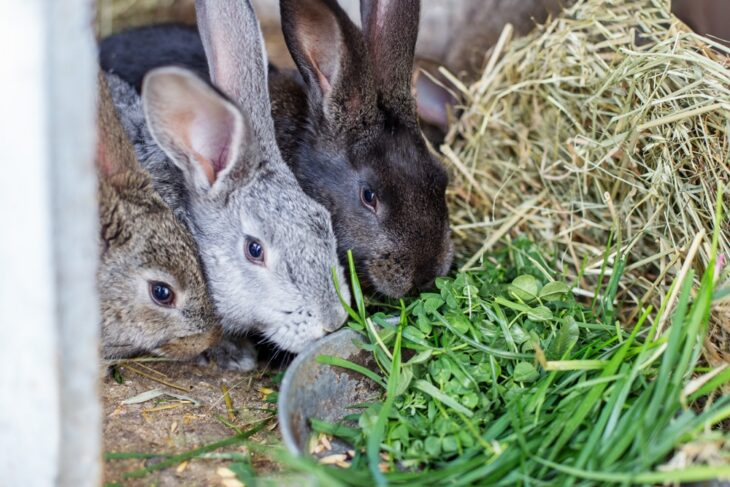
Through it all, hay remains the undisputed star of the menu. Keep their Timothy hay, oat hay, alfalfa, or orchard hay piles overflowing throughout the day and watch your happy buns binky around the room.
Disclaimer:
We are not veterinarians, and none of our information should be construed as veterinary advice.
Before adding any new product, please consult your exotic veterinarian. If your pet is acting unwell and you have concerns for their well being, please contact your vet immediately.

Betty Nelson is a lover of small pets with hands-on experience raising chickens, rabbits, guinea pigs, hamsters, and other small companions. She shares simple, practical tips based on real experience and trusted research to help you care for your furry friends. Her goal is to help pet parents take care of their little ones easily, enjoyably, and rewardingly.